
Front-End Due Diligence in Site Selection: Why Engaging Your Contractor Early Matters
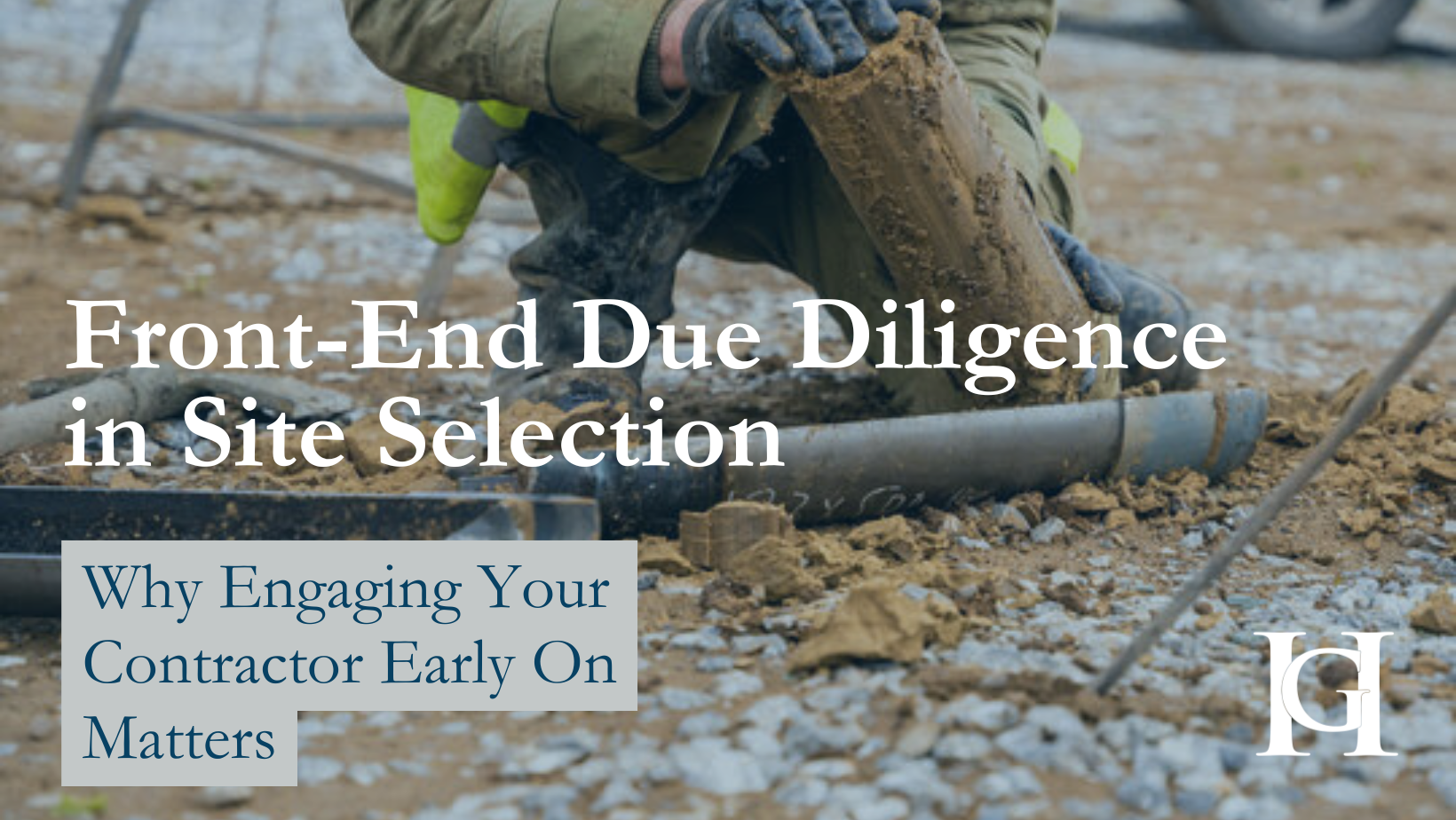
When it comes to building, one of the most important yet often overlooked phases is engaging a contractor during the site selection phase. While securing a site for your project can feel like progress, moving ahead without early contractor involvement can create avoidable complications, unexpected costs, and delays. Bringing a contractor in before a site is chosen ensures that all critical factors are evaluated upfront, setting the project on a smarter, safer, and more cost-efficient path.
Why the Soil and a Geotechnical Report Matter
One of the most critical aspects of early due diligence is understanding what lies beneath the surface. Soil conditions determine how a foundation must be designed, how much site preparation is required, and how stable a building will be over time. Overlooking these steps can lead to foundation failures, drainage issues, and costly redesigns and engineering changes. A geotechnical study may feel like an added step, but skipping it almost always results in additional costs later.
A geotechnical report is one of the best investments you can make during the site selection phase. Ideally, this report is completed before the land is purchased and provides data on:
- Soil types and weight-bearing capacity
- Water table levels
- Drainage and erosion patterns
- Shrinkage and swelling potential
- Foundation and pavement recommendations
- Site-specific risks
With this information, contractors and engineers can design appropriately, budget accurately, and determine whether the site is suitable for the intended use.
What Happens When You Don’t Do This
Consider a buyer is evaluating the purchase of what appears to be a dry, stable lot. Once the design begins, testing shows high-expansive clay beneath the surface. The foundation now requires major reinforcement, or the site becomes questionable altogether. A $5,000 soil study could have prevented what is now a $50,000 problem.
Situations like this are more common than you may think.
The Highland Group believes soil analysis should never be an afterthought. When our team is engaged early, before land is purchased, we can evaluate geotechnical factors, identify hidden risks, and guide our clients toward the best property decisions.
The Value of Local Knowledge in Site Selection
Beyond technical data, local insight is a powerful tool in determining site viability. eotechnical reports, zoning information, and environmental data are essential, but they do not always capture the nuances that come from years of experience working in a specific region.
Experienced contractors understand the subtleties that are not obvious on paper, such as:
- Areas prone to seasonal drainage or flooding
- Parcels built on fill dirt,
- “Good” streets with hidden infrastructure challenges
- Neighborhoods are shifting in ways that may affect long-term value.
This combination of regional knowledge and technical due diligence makes the site-selection process significantly more informed.
The Bottom Line
The ground beneath your project is more than just dirt. When evaluated early and accurately, it ensures the entire project is more innovative, safer, and more cost-effective. Whether developing a commercial site, selecting land for a new facility, or planning an expansion, engaging an experienced contractor early in the site selection process and investing in a geotechnical report to understand your soil are two of the best decisions you can make.
Sources:
- Douglas Partners. (2022). What does a geotechnical report tell you?
- Economic Development Partnership of Alabama. (n.d.). Site selection.
- Eduindex. (2024). Understanding soil types and their impact on construction.